33 NeuroAI in Action: Four Case Studies
Learning Objectives By the end of this chapter, you will be able to:
- Analyze real-world examples of the “biology-to-breakthrough” pipeline in NeuroAI.
- Identify the core computational principles behind predictive coding, memory replay, and visual attention.
- Evaluate how translating these principles into AI has led to engineering breakthroughs.
- Understand how multimodal data fusion, inspired by the brain, is being used to tackle critical healthcare challenges like Alzheimer’s disease prediction.
33.1 23.1 Introduction: From Biological Principle to Engineering Breakthrough
This chapter moves from theory to practice. We will explore four landmark case studies where a specific, powerful principle from neuroscience was translated into an AI system that solved a critical engineering problem.
Each case study follows a clear narrative:
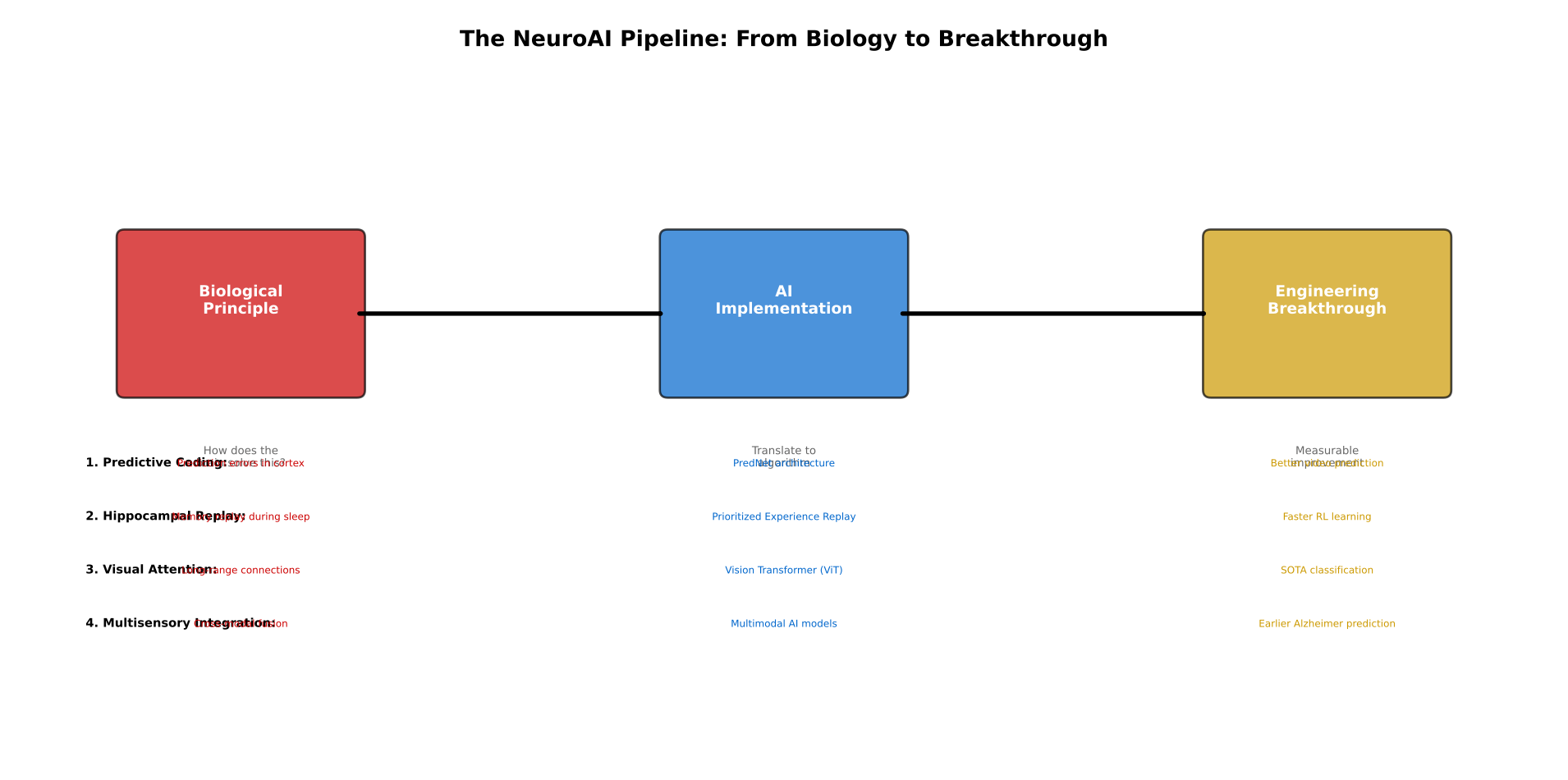 Figure 23.1: The NeuroAI pipeline from biological principle to engineering breakthrough. Each case study in this chapter follows this three-stage process: identifying a key computational principle in neuroscience, implementing it in an AI system, and achieving a measurable improvement in performance.
- The Biological Principle: A core idea about how the brain computes.
- The AI Implementation: The specific model or algorithm that translated this principle into code.
- The Engineering Breakthrough: The measurable improvement or new capability that resulted.
These examples are the heart of NeuroAI, demonstrating the immense value of looking to the brain for inspiration in building the next generation of intelligent systems.
33.2 23.2 Case Study 1: Predictive Coding
23.2.1 The Biological Principle: The Brain as a Prediction Machine
A leading theory in neuroscience is that the brain is not a passive receiver of sensory information, but an active, prediction-generating machine. The predictive coding framework proposes that higher-level brain areas constantly generate top-down predictions about what the lower-level sensory areas should be seeing, hearing, or feeling. The sensory areas then only need to send back the prediction error—the difference between the prediction and the reality. This is an incredibly efficient way to process information.
23.2.2 The AI Implementation: PredNet
PredNet is a deep learning architecture designed to explicitly implement the principles of predictive coding. It is a recurrent convolutional network where each layer attempts to predict the activity of the layer below it.
- Each layer generates a prediction of the next frame in a video sequence.
- This top-down prediction is compared to the actual bottom-up input.
- The resulting error signal is then passed up the hierarchy, updating the internal representations at each level.
23.2.3 The Engineering Breakthrough: More Robust and Efficient Vision
By building a model that actively predicts the future, the researchers achieved several key breakthroughs: - Improved Video Prediction: PredNet was significantly better at predicting future frames in a video than standard feedforward models. - Better Object Recognition: The representations learned by the network proved to be more robust for object recognition tasks, especially when dealing with noisy or ambiguous inputs. - Unsupervised Feature Learning: The model learned rich features of the visual world without needing explicit labels, simply by trying to predict what would happen next.
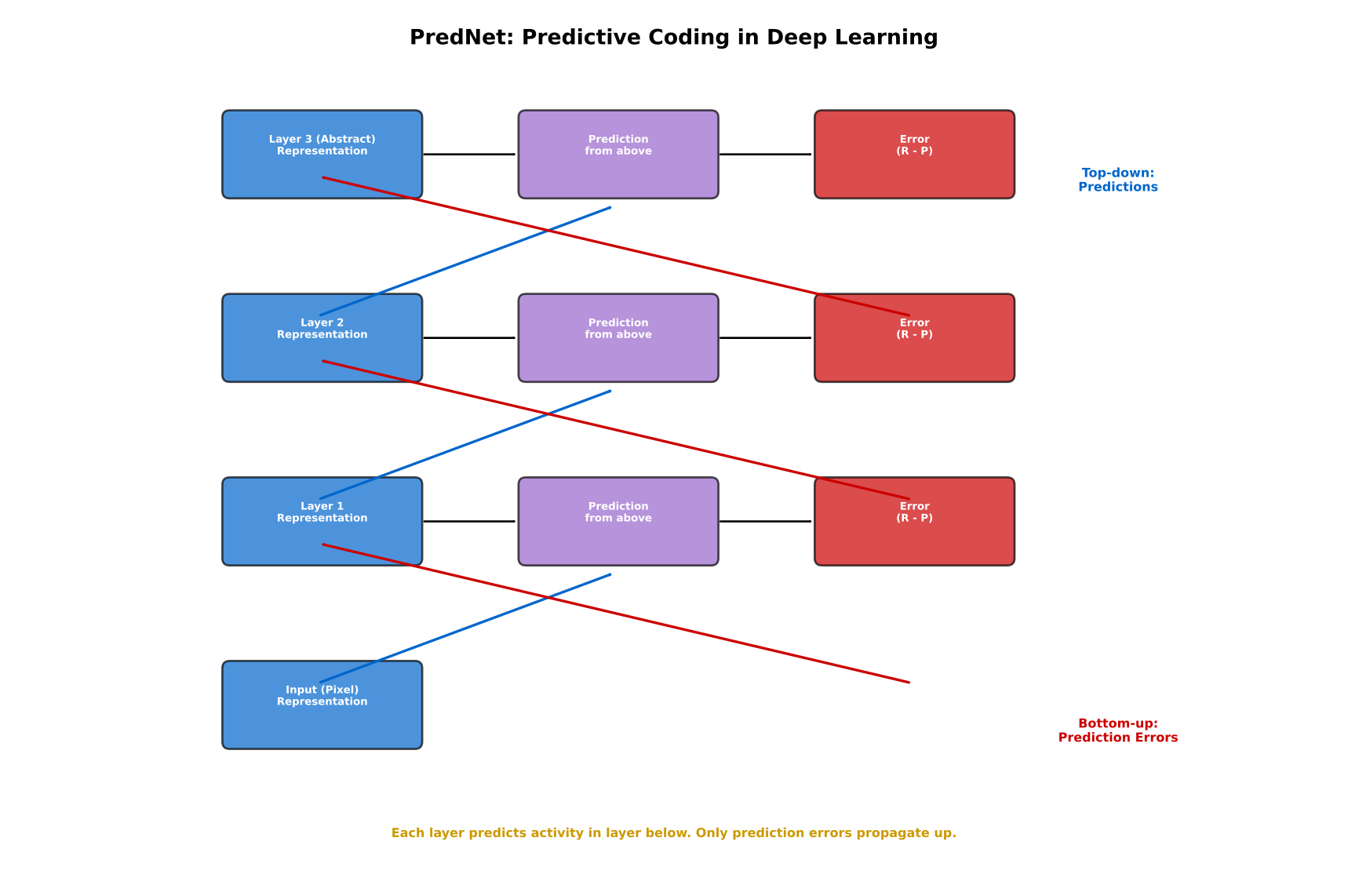 Figure 23.2: PredNet implements hierarchical predictive coding. Each layer generates predictions for the layer below (top-down). Only prediction errors propagate upward (bottom-up). This architecture learns rich representations by predicting the future, embodying the brain’s predictive processing framework.
The Takeaway: Building models that actively predict their own input, like the brain does, can lead to more robust and efficient representations of the world.
33.3 23.3 Case Study 2: Hippocampal Replay
23.3.1 The Biological Principle: Consolidating Memories During Rest
The brain does not learn from experiences only when they happen. The hippocampus, a key brain region for memory, has been observed to “replay” the neural activity patterns of recent experiences, particularly during sleep or quiet rest. This hippocampal replay is thought to be a crucial mechanism for memory consolidation, strengthening memories and transferring them to the neocortex for long-term storage. Crucially, the brain doesn’t replay everything equally; it appears to prioritize surprising or important events.
23.3.2 The AI Implementation: Prioritized Experience Replay
In Reinforcement Learning (RL), an agent learns by trial and error. A standard technique is experience replay, where the agent stores its past experiences in a buffer and randomly samples from them to train its policy network. This breaks the temporal correlations in experience and improves stability.
Inspired by hippocampal replay, researchers at DeepMind developed Prioritized Experience Replay (PER). Instead of sampling experiences uniformly, PER prioritizes them based on the TD-error—a measure of how surprising or unexpected the outcome of an experience was. Experiences with high error (big surprises) are replayed more frequently.
23.3.3 The Engineering Breakthrough: Dramatically More Efficient Learning
The impact of this simple, brain-inspired tweak was enormous. - Massive Sample Efficiency: RL agents using PER learned to play Atari games to a superhuman level far faster and using significantly less data than agents with a standard replay buffer. - Improved Performance: By focusing on the most informative experiences, the agents were able to achieve higher final scores on many games.
The Takeaway: Replaying surprising or important memories, just like the hippocampus does, can make AI learning algorithms dramatically more efficient and effective.
33.4 23.4 Case Study 3: Vision Transformers
23.4.1 The Biological Principle: Long-Range Connections and Global Integration
While the visual cortex has a clear hierarchical structure, it is also characterized by a dense network of long-range horizontal and feedback connections. These connections allow the brain to integrate information across the entire visual field, so that the interpretation of one part of a scene is informed by the context of the whole. This is the basis of visual attention—the ability to selectively process relevant information based on global context.
23.4.2 The AI Implementation: The Vision Transformer (ViT)
For years, computer vision was dominated by CNNs, which excel at detecting local features. The Vision Transformer (ViT) broke this mold by applying the Transformer architecture, originally designed for language, to vision.
The ViT works by: 1. Breaking an image into a sequence of fixed-size patches. 2. Treating these patches like words in a sentence. 3. Feeding this sequence into a standard Transformer, which uses self-attention to weigh the importance of every other patch when processing a given patch.
This architecture completely abandons the idea of local receptive fields and instead relies on the attention mechanism to learn which parts of the image are relevant to each other, no matter how far apart they are.
23.4.3 The Engineering Breakthrough: A New Backbone for Vision
When trained on very large datasets, ViTs surpassed the performance of state-of-the-art CNNs on image classification benchmarks. - Global Context: The self-attention mechanism allowed the model to learn relationships between distant parts of an image, something that is difficult for CNNs. - Flexibility and Scalability: Transformers proved to be more scalable than CNNs, continuing to improve as model and dataset sizes grew. - Interpretability: The attention maps of a ViT can be visualized, providing a clear window into which parts of an image the model “looked at” to make its decision.
The Takeaway: Embracing the brain’s principle of long-range, context-dependent integration via attention mechanisms can lead to more powerful and scalable vision systems.
33.5 23.5 Case Study 4: Multimodal AI for Alzheimer’s Prediction
23.5.1 The Biological Principle: Multisensory Integration
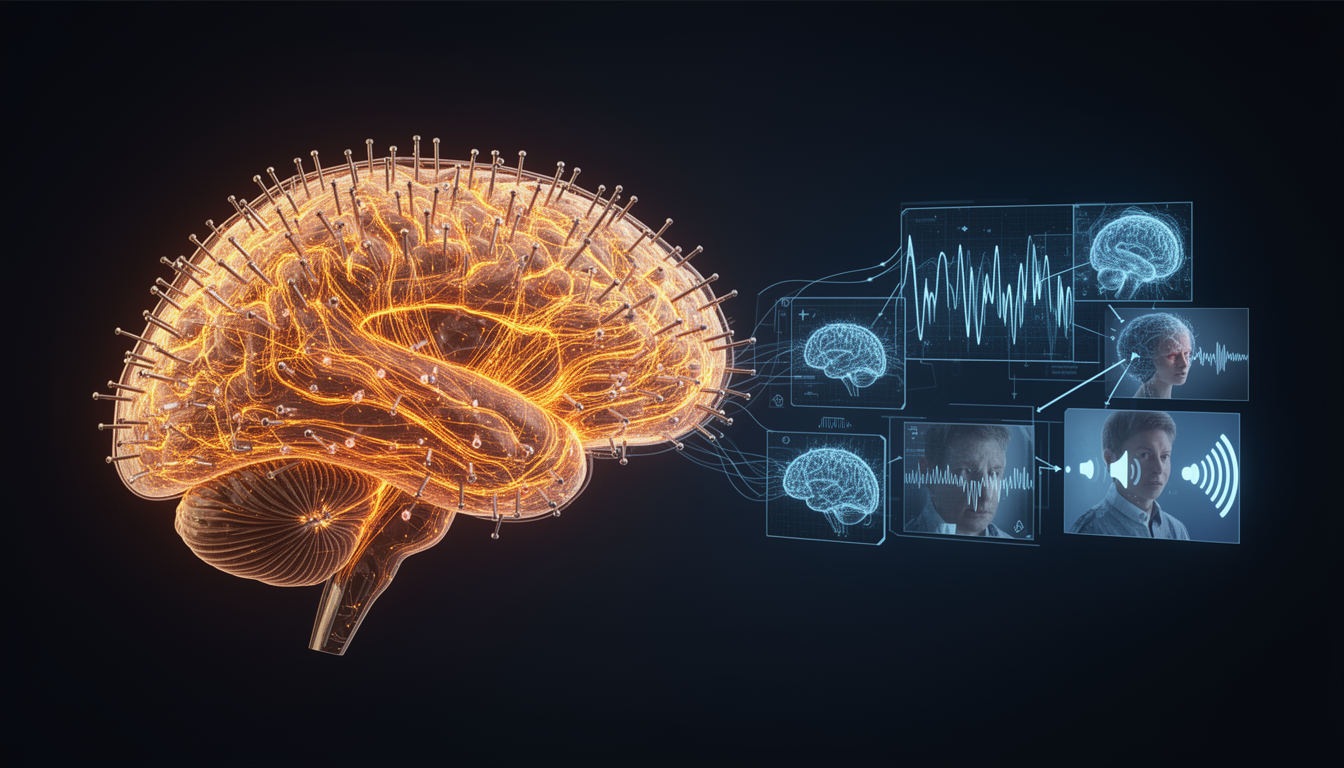
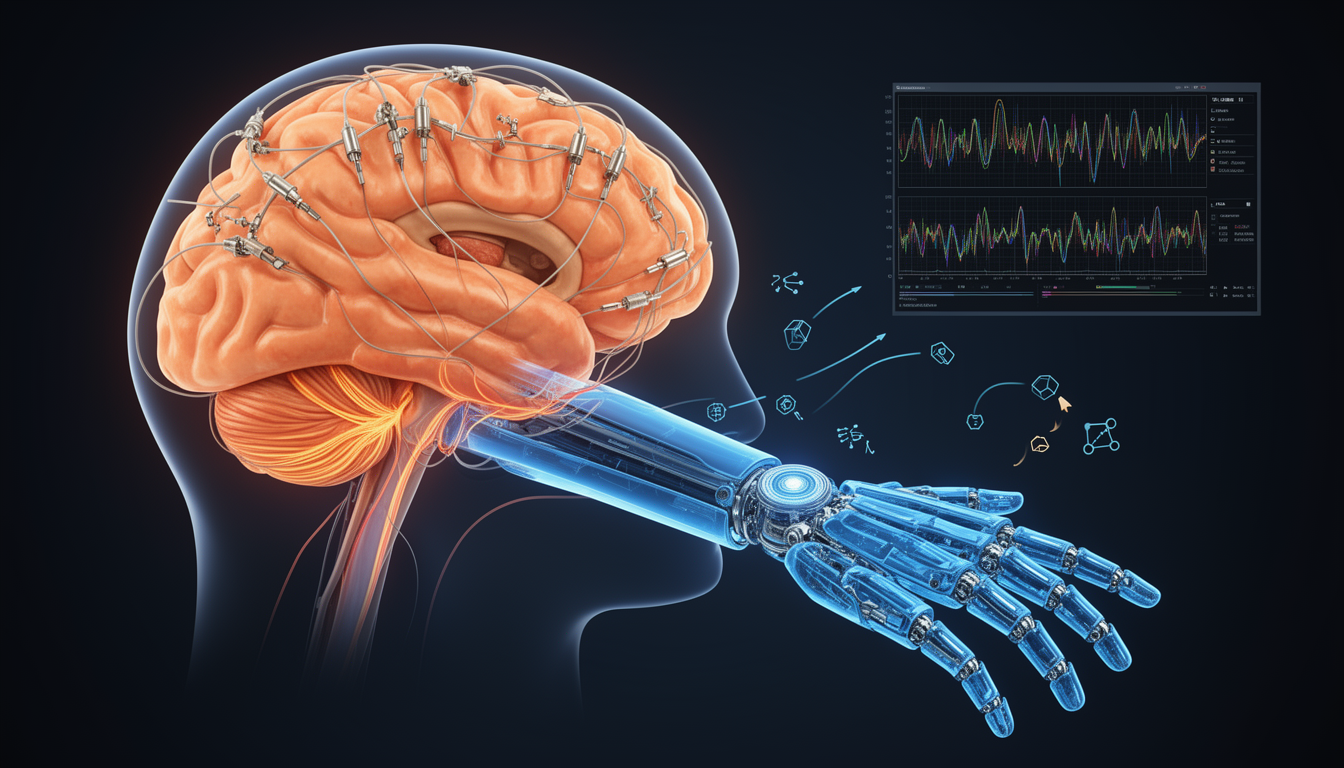
The brain creates a unified, robust perception of the world by integrating information from multiple senses. A single brain region, the superior temporal sulcus, might respond to the sight of a face, the sound of a voice, and the name of a person. This multisensory integration allows the brain to form a more complete and accurate model than any single sense could provide.
23.5.2 The AI Implementation: Multimodal Fusion Models
In healthcare, a patient’s status is not defined by a single data point, but by a combination of many different types of data. Inspired by the brain’s integrative abilities, researchers are building multimodal AI models to predict neurological disorders like Alzheimer’s disease.
These models are designed to fuse information from diverse sources: - Neuroimaging: MRI and PET scans showing brain structure and metabolic activity. - Genetics: Data on risk genes like APOE4. - Clinical Data: Cognitive test scores (e.g., MMSE), demographics, and medical history. - Behavioral Data: Speech patterns or gait information collected from sensors.
The model uses specialized encoders for each modality and then fuses their representations using techniques like cross-attention, allowing the model to learn the complex relationships between different data types.
23.5.3 The Engineering Breakthrough: Earlier and More Accurate Diagnosis
By integrating these multiple streams of evidence, multimodal models are achieving state-of-the-art performance in predicting the onset of Alzheimer’s disease. - Improved Accuracy: They consistently outperform models trained on any single modality. - Earlier Prediction: They can identify individuals at high risk of developing dementia years before significant clinical symptoms appear. - Personalized Biomarkers: The model can learn which combination of factors is most predictive for a given individual, paving the way for personalized medicine.
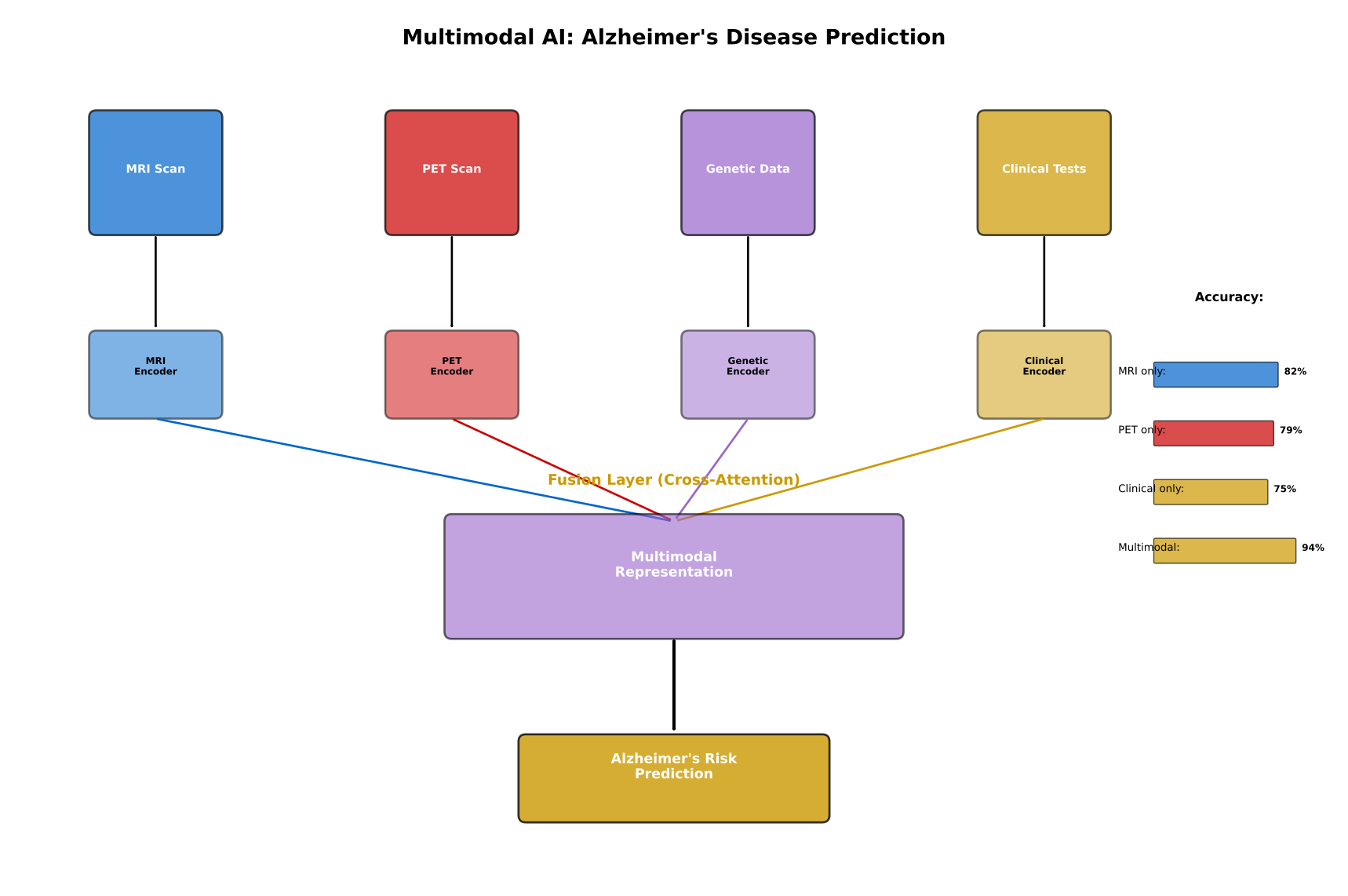 Figure 23.3: Multimodal AI system for Alzheimer’s disease prediction. Specialized encoders process each data modality (MRI, PET, genetic, clinical). Cross-attention fusion learns complex relationships between modalities. The multimodal approach (94% accuracy) significantly outperforms any single modality alone.
The Takeaway: Fusing information from multiple, diverse sources—just as the brain does—is a powerful strategy for building more accurate and robust AI systems for complex real-world problems like clinical diagnosis.
33.6 Exercises
Conceptual Questions
Explain the predictive coding framework and its implementation in PredNet. How does the brain’s hierarchical prediction generation mechanism translate into the architecture of PredNet? What computational advantages does predicting future frames provide over purely feedforward processing?
Compare biological memory replay to prioritized experience replay in reinforcement learning. Describe the biological phenomenon of hippocampal replay during sleep. How does prioritized experience replay (PER) implement similar principles? What determines which experiences are “surprising” or “important” in each system?
Analyze the role of attention in Vision Transformers vs. biological vision. How do self-attention mechanisms in ViTs enable global context integration? Compare this to the brain’s use of long-range connections and feedback. What computational trade-offs exist between CNNs (local receptive fields) and ViTs (global attention)?
Describe multimodal fusion in AI and the brain. Explain how the brain integrates information from multiple senses (vision, audition, touch). How do modern multimodal AI systems (e.g., for Alzheimer’s prediction) implement similar integration? What are the key challenges in effective multimodal fusion?
Computational Exercises
- Implement a simple predictive coding network. Create:
- A hierarchical network where each layer predicts the layer below
- Train it to predict the next frame in a video sequence
- Compare prediction error across layers
- Visualize what each layer learns to predict
- Compare performance to a standard feedforward network on the same task
- Build and compare experience replay strategies. Implement:
- Uniform random replay
- Prioritized experience replay based on TD-error
- Recency-weighted replay
- Train an RL agent on a simple task using each strategy
- Compare: sample efficiency, final performance, stability
- Analyze which experiences get replayed most frequently
- Create a mini Vision Transformer. Implement:
- Image patch extraction and embedding
- Self-attention mechanism for patches
- Compare to a CNN on the same image classification task
- Visualize attention maps to see which patches attend to which
- Discuss computational costs and benefits
- Simulate multimodal fusion for a prediction task. Create:
- A model that fuses two modalities (e.g., images + tabular data)
- Compare early fusion (concatenate features immediately) vs. late fusion (separate encoders, fuse at end)
- Measure performance of single-modality vs. multimodal models
- Analyze when multimodal fusion provides the largest benefit
Discussion Questions
- The translation from biology to AI: What gets lost? Discuss:
- What simplifications are necessary when translating a biological principle into an AI algorithm?
- Using any case study from this chapter, identify what aspects of the biological system are missing in the AI implementation
- Does this matter for performance? For understanding the brain?
- What future work could make these translations more faithful?
- Scaling laws and biological inspiration. Consider:
- Many AI breakthroughs come from scaling up simple ideas rather than biological inspiration
- Do we still need biology-inspired algorithms if scale solves everything?
- What problems might require biological insights that cannot be solved by scale alone?
- How should research resources be allocated between scaling existing methods and exploring bio-inspired alternatives?
- Real-world deployment of biology-inspired AI. Reflect on:
- Which of these case studies (PredNet, PER, ViT, multimodal fusion) is most impactful in real applications?
- What barriers prevent wider adoption of biology-inspired methods in industry?
- How could better understanding of brain mechanisms accelerate clinical AI (e.g., for Alzheimer’s prediction)?
- What ethical considerations arise when using AI for medical diagnosis and prediction?
33.7 References
Friston, K. (2010). The free-energy principle: A unified brain theory? Nature Reviews Neuroscience, 11(2), 127-138.
Lotter, W., Kreiman, G., & Cox, D. (2016). Deep predictive coding networks for video prediction and unsupervised learning. arXiv preprint arXiv:1605.08104.
Schaul, T., Quan, J., Antonoglou, I., & Silver, D. (2015). Prioritized experience replay. arXiv preprint arXiv:1511.05952.
Foster, D. J., & Wilson, M. A. (2006). Reverse replay of behavioural sequences in hippocampal place cells during the awake state. Nature, 440(7084), 680-683.
Dosovitskiy, A., Beyer, L., Kolesnikov, A., Weissenborn, D., Zhai, X., Unterthiner, T., … & Houlsby, N. (2020). An image is worth 16x16 words: Transformers for image recognition at scale. arXiv preprint arXiv:2010.11929.
Vaswani, A., Shazeer, N., Parmar, N., Uszkoreit, J., Jones, L., Gomez, A. N., … & Polosukhin, I. (2017). Attention is all you need. Advances in Neural Information Processing Systems, 30.
Jack, C. R., Bennett, D. A., Blennow, K., Carrillo, M. C., Dunn, B., Haeberlein, S. B., … & Contributors. (2018). NIA-AA research framework: Toward a biological definition of Alzheimer’s disease. Alzheimer’s & Dementia, 14(4), 535-562.
Ngiam, J., Khosla, A., Kim, M., Nam, J., Lee, H., & Ng, A. Y. (2011). Multimodal deep learning. Proceedings of the 28th International Conference on Machine Learning (ICML-11), 689-696.
Srivastava, N., & Salakhutdinov, R. R. (2012). Multimodal learning with deep Boltzmann machines. Advances in Neural Information Processing Systems, 25.
Rao, R. P., & Ballard, D. H. (1999). Predictive coding in the visual cortex: A functional interpretation of some extra-classical receptive-field effects. Nature Neuroscience, 2(1), 79-87.
Pereira, S., Meier, R., Alves, V., Reyes, M., & Silva, C. A. (2019). Automatic brain tumor grading from MRI data using convolutional neural networks and quality assessment. Understanding and Interpreting Machine Learning in Medical Image Computing Applications, 106-114.