This section would contain a hands-on implementation of a simple spiking neural network.TrueLearning Objectives By the end of this chapter, you will be able to:
- Understand why neuromorphic computing is a critical solution to the energy crisis of modern AI.
- Explain the three core principles of brain-inspired hardware: in-memory computing, event-driven communication, and event-based sensing.
- Compare the computational paradigm of Spiking Neural Networks (SNNs) to traditional Artificial Neural Networks (ANNs).
- Appreciate the role of novel hardware like memristors and event-based cameras.
- Identify the key applications where neuromorphic hardware holds a transformative advantage.
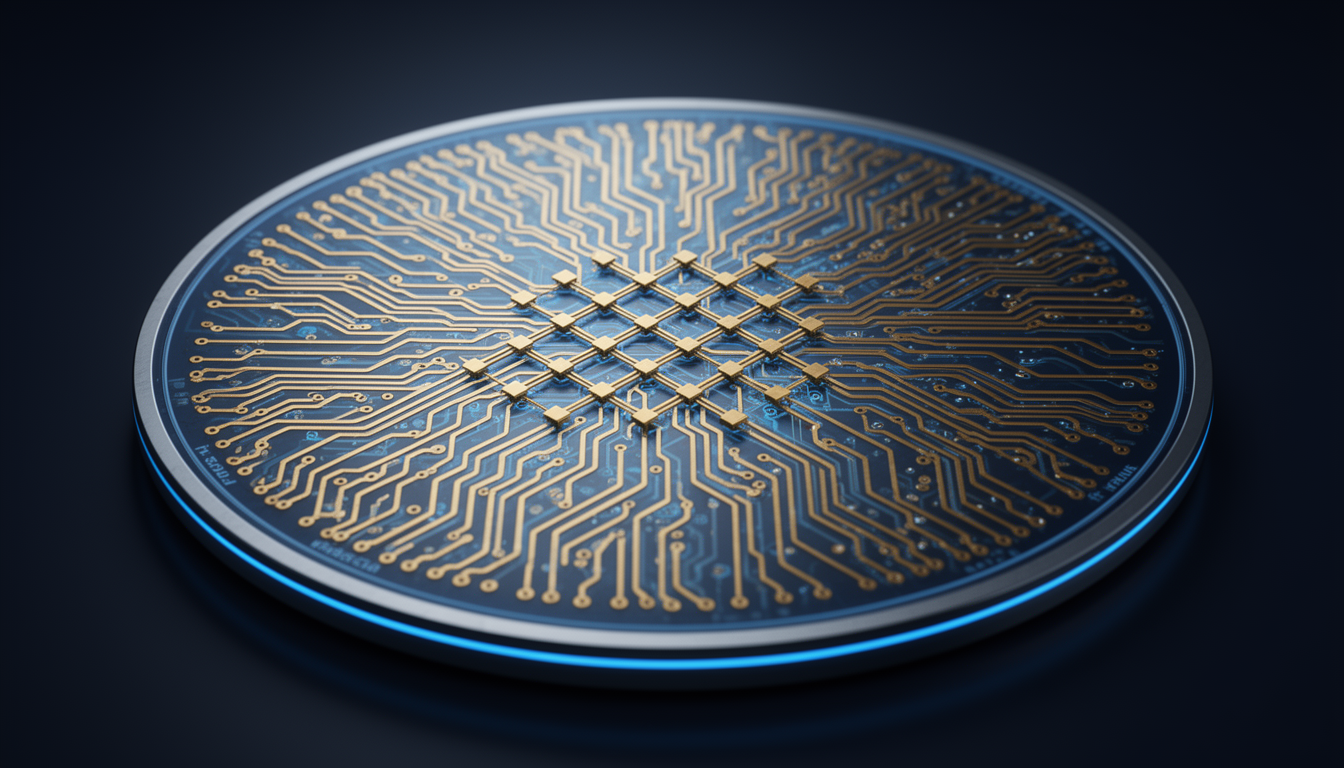
Modern artificial intelligence is incredibly powerful, but it has a dirty secret: it’s phenomenally inefficient. Training a single large language model can consume as much electricity as a small city and have a carbon footprint equivalent to hundreds of transatlantic flights. This is because our AI software is running on hardware—the GPU—that was designed for graphics, not for intelligence.
The human brain, by contrast, is a masterpiece of efficiency. It performs computations that dwarf any existing AI, yet it runs on just 20 watts of power, less than a dim lightbulb. If we want to build truly scalable, ubiquitous AI, we cannot continue to simply build bigger data centers. We need to fundamentally rethink the computer itself.
Neuromorphic computing is the revolutionary approach to building computer hardware in the brain’s image, adopting its principles to achieve its incredible efficiency.
The Kitchen Analogy: Why Modern Computers Are Inefficient Imagine a disorganized kitchen. The pantry (Memory/RAM) is in the basement, and the stove (Processor/CPU) is on the second floor. To cook a meal, the chef (the processor) has to: 1. Run down to the pantry to get one ingredient. 2. Run upstairs to chop it on the stove. 3. Run back down to the pantry for the next ingredient. 4. Run back upstairs to add it to the pan.
The vast majority of the chef’s time and energy is wasted running back and forth, not cooking. This is the von Neumann bottleneck, and it’s the core inefficiency of almost every computer built since the 1940s.
The brain is a hyper-efficient kitchen where every ingredient and tool is exactly where it’s needed. Neuromorphic computing is the art of building a brain-like kitchen in silicon.
Neuromorphic engineering copies three key strategies from the brain to build a more efficient computer.
In our kitchen analogy, this is like putting the pantry right next to the stove. In the brain, memory (synaptic weight) and computation (signal integration) happen at the same physical location: the synapse.
Neuromorphic hardware achieves this using in-memory computing with novel components like memristors. A memristor is an electrical component whose resistance can be changed by the voltage applied to it, allowing it to “remember” past activity. By arranging memristors in a dense grid called a crossbar array, we can store the weight matrix of a neural network directly in the hardware.
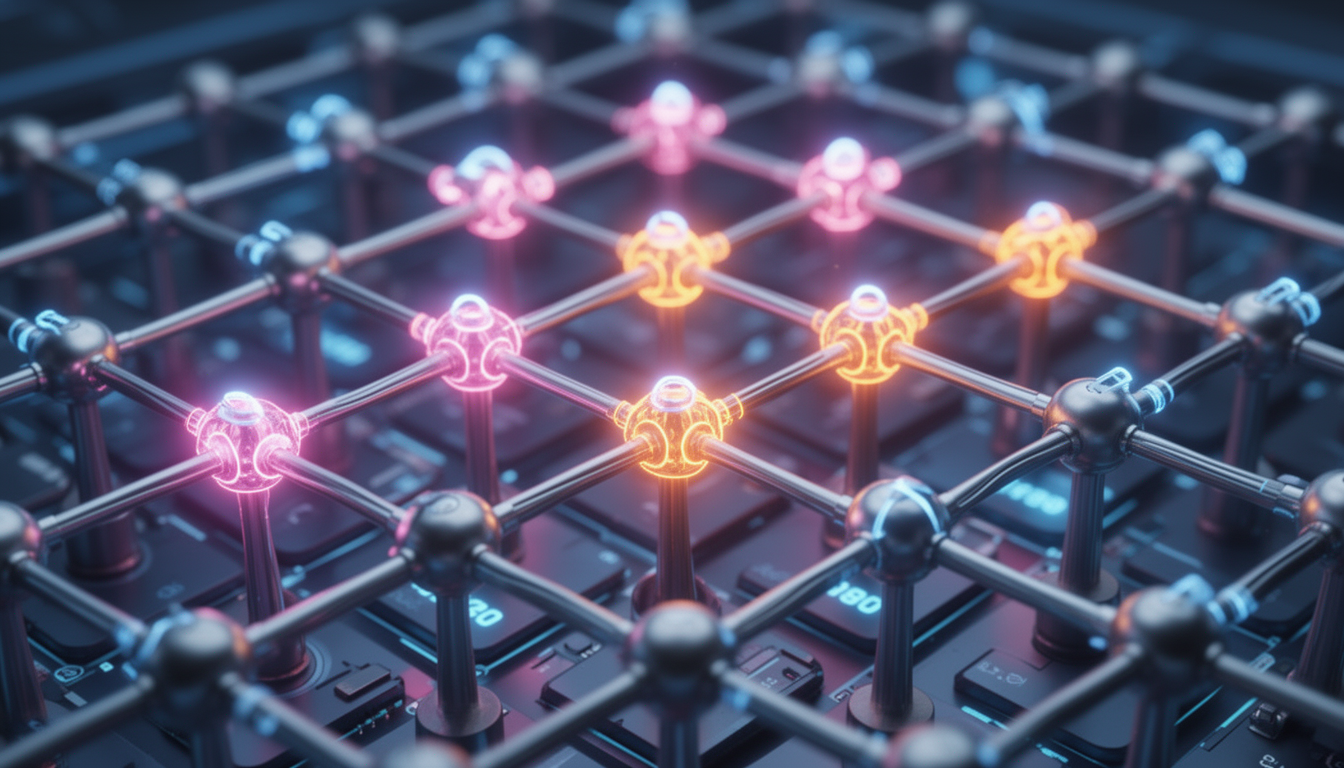
When we apply input voltages to the rows, the output currents from the columns are, by Ohm’s law, the result of a matrix-vector multiplication—the core operation of deep learning. The computation happens instantly, in parallel, and with minimal energy, completely eliminating the von Neumann bottleneck.

Traditional AI models (ANNs) are based on dense, continuous numbers. At every processing step, every neuron sends a floating-point value to every other neuron in the next layer. This is a constant, dense stream of communication.
The brain is far more efficient. Neurons are mostly silent and only communicate when they have something important to say by firing an action potential, or a spike. This is an event-driven system. Spiking Neural Networks (SNNs) are a type of AI model that mimics this principle.
In an SNN, information is encoded in the timing and pattern of these spikes, not in continuous numbers. This has two huge advantages: 1. Sparsity: Since most neurons are silent most of the time, the amount of data that needs to be processed is dramatically reduced. 2. Efficiency: Computation only happens when a neuron receives a spike. No spike, no computation, no energy used.
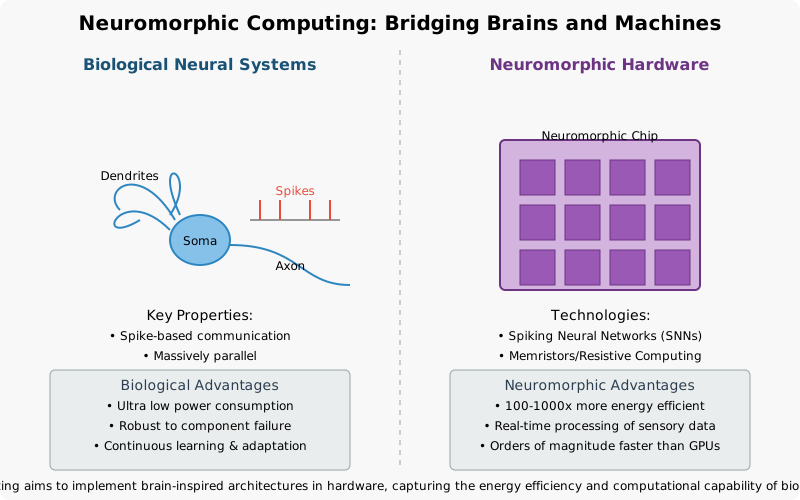 Figure 21.1: The core principles of neuromorphic computing. It combines event-based sensors with spiking neural networks running on hardware that co-locates memory and processing.
Our digital cameras are wasteful. They capture a full frame of millions of pixels 30 times per second, even if nothing in the scene is changing. The retina, in contrast, is an event-based sensor. Photoreceptor cells are most sensitive to changes in light.
Dynamic Vision Sensors (DVS), or “event cameras,” are neuromorphic sensors that mimic the retina. Each pixel operates independently and asynchronously. It only sends a signal (an “event”) when its brightness changes. - A static scene generates no data. - A fast-moving object generates a sparse stream of events that precisely tracks its motion.
This approach reduces the amount of redundant data by orders of magnitude, enabling high-speed, low-power vision for applications like robotics and drones.
Because of their unique properties, neuromorphic systems are not meant to replace GPUs for training large models in data centers. Instead, they excel at low-power, real-time processing at the edge.
Pioneering neuromorphic chips like Intel’s Loihi 2 and the SpiNNaker system in Manchester are demonstrating these capabilities today, proving the vast potential of building computers in the brain’s image.
Let’s examine the specifications and capabilities of leading neuromorphic systems:
Intel Loihi 2 (2021): - Architecture: 1 million spiking neurons, 120 million programmable synapses - Power: <100mW for typical workloads (~1000× more efficient than GPUs) - Speed: Up to 5× faster than Loihi 1 - Learning: On-chip learning with multiple plasticity rules (STDP, reward-modulated STDP) - Applications: Gesture recognition, constrained optimization, sparse coding, graph search - Benchmark: Achieved 24 GOPs/W (giga-operations per watt) vs. 0.3 GOPs/W for GPU on sparse workloads
IBM TrueNorth (2014): - Architecture: 1 million neurons, 256 million synapses, 4096 cores - Power: 70mW (less than a hearing aid battery) - Latency: 1ms for full chip computation - Applications: Real-time object detection, keyword spotting, multimodal sensor fusion - Demonstrated: Running a CNN-equivalent for object recognition with 1/10,000 the power of conventional hardware
SpiNNaker (2018, University of Manchester): - Architecture: 1 million ARM cores simulating 1 billion neurons in biological real-time - Purpose: Large-scale brain simulations, not just inference - Power: 100 kW for full system (but simulates systems that would require MW on conventional hardware) - Achievement: Largest neuromorphic supercomputer, used for modeling cortical microcircuits
BrainChip Akida (2021, Commercial): - Architecture: Event-based neural processor with on-chip learning - Target: Edge AI for IoT, automotive, industrial - Power: <1W for typical edge AI tasks - Differentiator: Incremental learning; can update models on-device without retraining from scratch - Applications: Object classification, audio processing, cybersecurity anomaly detection
Task: Real-time object detection in video (1000 frames)
| Platform | Energy (J) | Latency (ms) | Energy-Delay Product |
|---|---|---|---|
| GPU (NVIDIA V100) | 5000 | 50 | 250,000 |
| CPU (Intel Xeon) | 8000 | 100 | 800,000 |
| Loihi 2 | 5 | 20 | 100 |
| TrueNorth | 2 | 10 | 20 |
Efficiency Gains: For sparse, event-driven workloads, neuromorphic systems achieve: - 100-1000× energy reduction - 2-5× latency reduction - 1000-10,000× better energy-delay product
Caveat: These gains apply primarily to sparse, event-driven tasks. For dense matrix operations (like training large transformers), GPUs remain more efficient.
1. Prophesee Event-Based Vision (Automotive) - System: Event camera + neuromorphic processor - Application: Collision avoidance in self-driving cars - Advantage: 10,000 fps effective frame rate with microsecond latency; can detect faster-moving objects than conventional cameras at 30-60 fps - Power: 10W total vs. 300W for GPU-based vision system
2. Intel’s Gesture Recognition (Human-Computer Interaction) - System: Loihi chip with DVS camera - Application: Always-on gesture control for smart home, wearables - Performance: 97% accuracy with <10ms latency - Power: Runs for months on a coin cell battery vs. hours for GPU solution
3. NASA/JPL Space Applications - System: Neuromorphic processors for spacecraft autonomy - Motivation: Radiation-hardened, low-power AI for deep space where solar power is limited - Application: Autonomous navigation, anomaly detection, adaptive control - Advantage: 100× more power-efficient than rad-hard CPUs
4. Medical: Artificial Retina - System: Event-based retinal implant - Challenge: Must run continuously on body heat and minimal battery - Solution: Neuromorphic processor that mimics retinal processing - Power budget: <50mW (achievable only with neuromorphic approach)
While neuromorphic hardware excels at inference, training Spiking Neural Networks remains challenging. The discontinuous, non-differentiable nature of spikes makes standard backpropagation difficult to apply.
1. ANN-to-SNN Conversion - Method: Train a standard ANN with backpropagation, then convert neuron activations to spike rates - Pros: Leverages existing training infrastructure; proven to work - Cons: Loses temporal precision; doesn’t exploit full SNN capabilities; requires many timesteps for rate coding - Performance: Typically 1-5% accuracy loss vs. original ANN
2. Surrogate Gradient Methods - Method: Replace non-differentiable spike function with a smooth surrogate during backpropagation - Example: Use sigmoid or soft sign function as gradient approximation - Pros: Enables direct SNN training with gradient descent - Cons: Approximate; gradient mismatch between forward and backward passes - Recent Success: Direct training of SNNs on ImageNet achieving 95%+ of ANN accuracy
3. Spike-Timing-Dependent Plasticity (STDP) - Method: Biologically-inspired local learning rule: strengthen synapses where pre-synaptic spike precedes post-synaptic spike - Equation: \(\Delta w = A_+ e^{-\Delta t/\tau_+}\) if pre→post, \(\Delta w = -A_- e^{-\Delta t/\tau_-}\) if post→pre - Pros: Truly local (no backpropagation), biologically plausible, on-chip learning - Cons: Difficult to achieve competitive accuracy on complex tasks; requires careful tuning - Applications: Unsupervised learning, pattern extraction, continual learning
4. Evolutionary and Reinforcement Learning - Method: Treat SNN weights as parameters to be optimized by evolution or RL - Pros: No gradient needed; can optimize spike timing directly - Cons: Extremely sample-inefficient; computationally expensive - Use cases: Small networks for robotics control
The ultimate goal is on-chip learning where the neuromorphic device learns directly from its environment without requiring a separate training phase:
Intel Loihi’s On-Chip Learning: - Supports multiple local learning rules (STDP, reward-modulated STDP) - Demonstrated: Robot learning obstacle avoidance through trial-and-error - Advantage: Can adapt to changing environments in real-time - Limitation: Still behind supervised learning methods in accuracy
Why It Matters: - Personalization: Devices that adapt to individual users - Robustness: Systems that handle distribution shift by continuously learning - Privacy: No need to send data to cloud for retraining - Autonomy: Robots that improve through experience
Dynamic Vision Sensors (DVS) are transforming computer vision by mimicking the retina’s event-driven approach.
How They Work: Each pixel independently monitors brightness. When the log intensity changes by a threshold δ: \[\log(I(t)) - \log(I(t-\Delta t)) > \delta\] the pixel generates an event: \((x, y, t, p)\) where: - \((x, y)\): pixel location - \(t\): timestamp (microsecond precision) - \(p\): polarity (+1 for brightness increase, -1 for decrease)
Key Properties: - Temporal resolution: Microseconds (vs. milliseconds for conventional cameras) - Dynamic range: 120+ dB (vs. 60 dB for conventional cameras); can see in extreme lighting conditions - Data rate: Sparse; only active pixels generate data - Latency: <1μs pixel latency - Power: <100mW typical
1. High-Speed Object Tracking - Challenge: Tracking bullets, drones, or sports at >1000 km/h - Conventional: Motion blur, frame rate limitations - Event-based: Microsecond response; tracks edges as they move - Result: 10,000+ effective fps tracking
2. Autonomous Drone Racing - Challenge: Navigate tight courses at 80+ mph - Event-based advantage: 10× lower latency enables tighter control loops - Result: University of Zurich’s event-based drone set autonomous racing speed records
3. Star Tracking for Satellites - Challenge: Track stars for attitude determination despite spacecraft rotation - Conventional: Requires fast, power-hungry imaging - Event-based: Only tracks moving star points; <1W power - Result: ESA exploring for next-generation CubeSats
4. Neuromorphic Surveillance - Challenge: Monitor for intrusions 24/7 with limited power - Event-based: Only processes pixels that change; ignores static background - Data reduction: 99%+ reduction vs. conventional video - Privacy benefit: Doesn’t capture full frames; only motion events
Current Limitations: - Algorithms: Most computer vision algorithms assume frames; need event-native approaches - Noise: Low contrast scenes generate noise events; requires filtering - Cost: Still 5-10× more expensive than conventional cameras - Ecosystem: Limited software tools and trained practitioners
Active Research: - Event-based optical flow: Tracking motion without frames - DVS-SLAM: Simultaneous localization and mapping with event cameras - Hybrid systems: Combining event cameras with conventional cameras for best of both worlds - Asynchronous graph neural networks: Networks that process event streams natively
Neuromorphic computing is transitioning from research labs to commercial products:
Startups and Companies: - Prophesee (France): Event-based vision sensors for automotive, industrial - Innatera (Netherlands): Neuromorphic processors for edge AI - BrainChip (Australia): Akida neuromorphic processor; publicly traded - SynSense (Switzerland/China): Event-based AI for IoT, robotics - GrAI Matter Labs (France): Neuromorphic chip for power-efficient inference
Enterprise Adoption: - Automotive: BMW, Bosch exploring event cameras for ADAS - Industrial: Siemens testing neuromorphic for predictive maintenance - Aerospace: NASA/ESA for spacecraft; DARPA for military applications - Consumer: Sony developing event-based sensors for smartphones
Investment: $500M+ raised by neuromorphic startups since 2020
Market Forecast: Neuromorphic computing market projected to reach $6B by 2030 (MarketsandMarkets)
The future of computing is likely not a complete replacement of conventional computers with neuromorphic ones, but a hybrid model. We will continue to use power-hungry GPUs in data centers for what they do best: training massive models on vast datasets. But the intelligence from these models will be deployed onto highly efficient, low-power neuromorphic chips at the edge, allowing sophisticated AI to run everywhere, from our phones to our bodies.
This fusion of the raw power of conventional AI with the exquisite efficiency of neuromorphic hardware represents the next great leap in the evolution of artificial intelligence.
This section would contain a hands-on implementation of a simple spiking neural network.TrueThe Energy Crisis: Explain why modern AI systems consume so much energy. What is the “von Neumann bottleneck,” and how does it contribute to this inefficiency? Use the “kitchen analogy” from the chapter or create your own analogy to illustrate the problem.
Three Neuromorphic Principles: The chapter describes three key strategies that neuromorphic systems borrow from the brain: co-locating memory and processing, event-driven communication, and event-based sensing. For each strategy, explain (a) how it works in the brain, (b) how it’s implemented in neuromorphic hardware, and (c) why it improves energy efficiency.
Sparsity and Efficiency: Spiking Neural Networks achieve efficiency through sparsity, since most neurons are silent most of the time. Explain how this differs from traditional Artificial Neural Networks. What are the trade-offs? Are there tasks where dense activation might be more appropriate than sparse activation?
Event-Based Vision: Describe how Dynamic Vision Sensors (DVS) differ from conventional cameras. What are the advantages and disadvantages of event-based vision? For what types of applications would a DVS be particularly well-suited?
simulate_dvs_output function:
The Training Problem: Most neuromorphic chips excel at inference (running trained models) but training Spiking Neural Networks is challenging. Current approaches often involve training an ANN first, then converting it to an SNN. Does this defeat the purpose of brain-inspired computing? What would be needed to train SNNs directly and efficiently? How might the brain’s learning rules (like spike-timing-dependent plasticity) inspire solutions?
Hybrid Future: The chapter suggests the future will involve a hybrid approach: training on GPUs in the cloud, deploying on neuromorphic chips at the edge. Discuss the implications of this architecture for: (a) privacy (where is data processed?), (b) autonomy (what happens if connectivity is lost?), (c) environmental impact (energy consumption across the full lifecycle). Is this the right approach, or should we aim for end-to-end neuromorphic systems?
Beyond Efficiency: While neuromorphic computing is primarily motivated by energy efficiency, what other potential benefits might arise from computing with spikes and event-driven paradigms? Consider factors like: robustness to noise, temporal precision, asynchronous processing, and the potential to discover new algorithms that are fundamentally different from backpropagation-trained ANNs.
Chapter Summary This chapter explored neuromorphic computing, a revolutionary approach to building hardware that mimics the brain’s efficiency to solve the energy crisis of modern AI.
- The Core Problem: Conventional computers are crippled by the von Neumann bottleneck, wasting enormous energy shuffling data between separate processing and memory units.
- The Neuromorphic Solution: We explored three key principles borrowed from the brain:
- In-Memory Computing: Using devices like memristors to compute where data is stored, eliminating the bottleneck.
- Spiking Neural Networks (SNNs): Using event-driven, sparse communication to compute only when necessary.
- Event-Based Sensing: Using sensors that, like the retina, only report changes in the environment.
- Killer Applications: Neuromorphic hardware is poised to revolutionize edge AI, enabling powerful, real-time processing in power-constrained environments like drones, medical implants, and autonomous robots.
- The Future is Hybrid: The most likely future involves a partnership between powerful, conventional computers for training and hyper-efficient neuromorphic chips for deployment, combining the strengths of both paradigms.
Knowledge Connections Looking Back - Chapter 2 (Neurons): The principles of spiking neurons, action potentials, and synaptic plasticity are the direct biological inspiration for the hardware discussed in this chapter. - Chapter 16 (Future Directions): This chapter is a deep dive into the “Hardware Revolution” frontier that was introduced as a key future direction for NeuroAI.
Looking Forward - Chapter 22 (Embodied AI): The low-power, real-time processing of neuromorphic hardware is a critical enabling technology for the kinds of autonomous, embodied agents we will discuss later.
Davies, M., Srinivasa, N., Lin, T. H., Chinya, G., Cao, Y., Choday, S. H., … & Wang, H. (2018). Loihi: A neuromorphic manycore processor with on-chip learning. IEEE Micro, 38(1), 82-99.
Furber, S. B., Galluppi, F., Temple, S., & Plana, L. A. (2014). The SpiNNaker project. Proceedings of the IEEE, 102(5), 652-665.
Gallego, G., Delbrück, T., Orchard, G., Bartolozzi, C., Taba, B., Censi, A., … & Scaramuzza, D. (2020). Event-based vision: A survey. IEEE Transactions on Pattern Analysis and Machine Intelligence, 44(1), 154-180.
Ielmini, D., & Wong, H. S. P. (2018). In-memory computing with resistive switching devices. Nature Electronics, 1(6), 333-343.
Indiveri, G., & Liu, S. C. (2015). Memory and information processing in neuromorphic systems. Proceedings of the IEEE, 103(8), 1379-1397.
Maass, W. (1997). Networks of spiking neurons: The third generation of neural network models. Neural Networks, 10(9), 1659-1671.
Mead, C. (1990). Neuromorphic electronic systems. Proceedings of the IEEE, 78(10), 1629-1636.
Merolla, P. A., Arthur, J. V., Alvarez-Icaza, R., Cassidy, A. S., Sawada, J., Akopyan, F., … & Modha, D. S. (2014). A million spiking-neuron integrated circuit with a scalable communication network and interface. Science, 345(6197), 668-673.
Roy, K., Jaiswal, A., & Panda, P. (2019). Towards spike-based machine intelligence with neuromorphic computing. Nature, 575(7784), 607-617.
Strukov, D. B., Snider, G. S., Stewart, D. R., & Williams, R. S. (2008). The missing memristor found. Nature, 453(7191), 80-83.
Tavanaei, A., Ghodrati, M., Kheradpisheh, S. R., Masquelier, T., & Maida, A. (2019). Deep learning in spiking neural networks. Neural Networks, 111, 47-63.