Learning Objectives By the end of this chapter, you will be able to:
- Describe the concept of large-scale brain networks and how they are studied.
- Contrast the functions of the Default Mode Network (DMN) and the Executive Control Network (ECN).
- Explain how the dynamic interplay between these two networks enables flexible human cognition.
- Connect this neural dynamic to core concepts in AI, including the exploration/exploitation trade-off and generative vs. discriminative models.
- Analyze simulated brain network data using graph theory concepts in Python.
Have you ever been driving a familiar route and suddenly realized you have no memory of the last five minutes? Or found the solution to a difficult problem pops into your head while you’re in the shower? These common experiences are not quirks; they are the hallmark of a fundamental principle of brain organization: the existence of two complementary, and often competing, modes of thought.
For decades, neuroscience focused on how the brain responds to external tasks. But in the late 1990s, a surprise discovery was made: a consistent network of brain regions became more active when people were doing nothing at all. This network, responsible for our rich inner world of daydreaming, memory, and future planning, was named the Default Mode Network (DMN).
Its counterpart is the Executive Control Network (ECN), the brain’s “CEO.” This is the network that engages when you focus on a task, solve a math problem, or pay close attention to the world around you.
This chapter is about the dynamic dance between these two minds: the introspective, creative DMN and the focused, goal-oriented ECN. Understanding this interplay is not just key to understanding human consciousness; it provides a powerful blueprint for building more flexible and creative AI.
Before we dive into the DMN and ECN, we need to understand the concept of a brain network. The brain is not a collection of independent modules; it’s a massively interconnected system where regions constantly communicate. Network neuroscience uses tools from graph theory to map and analyze these communication patterns.
Using techniques like fMRI (which tracks blood flow as a proxy for neural activity), neuroscientists can identify which brain regions tend to work together, revealing the brain’s intrinsic functional networks.
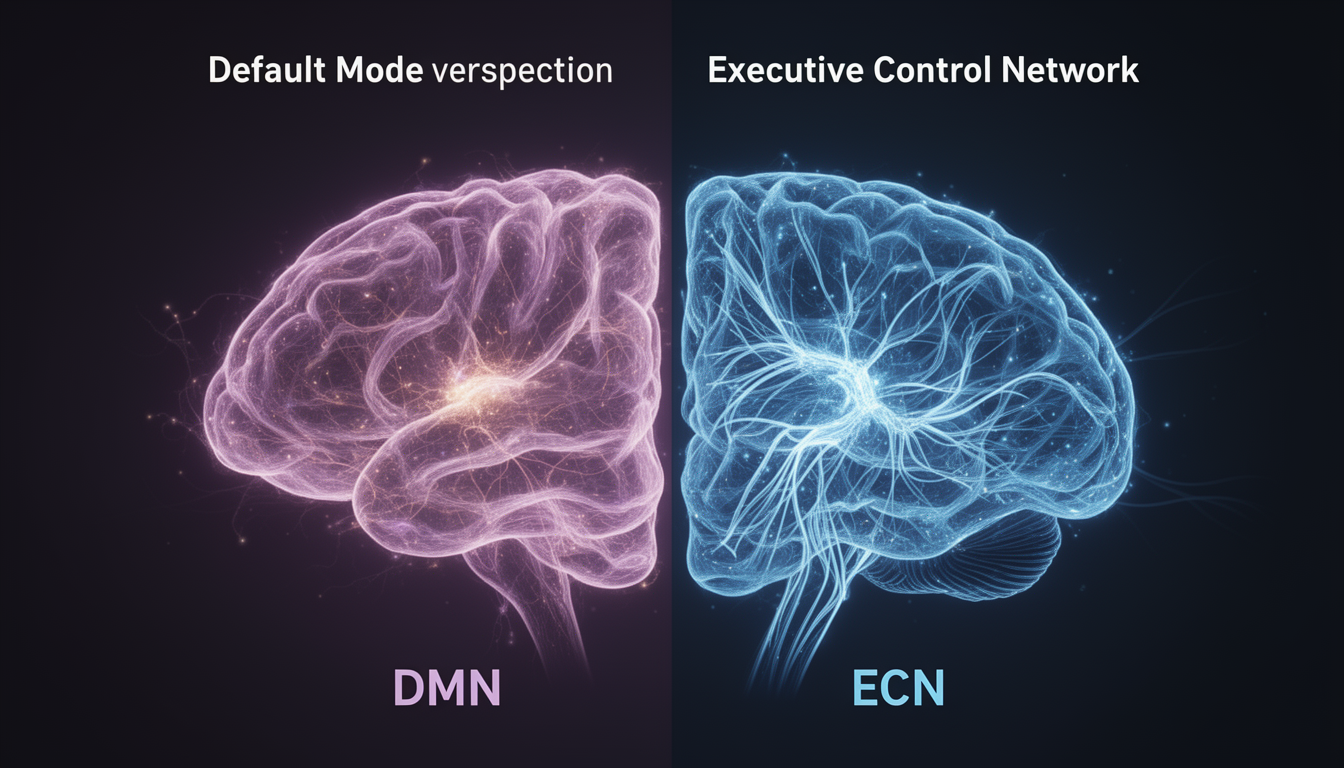
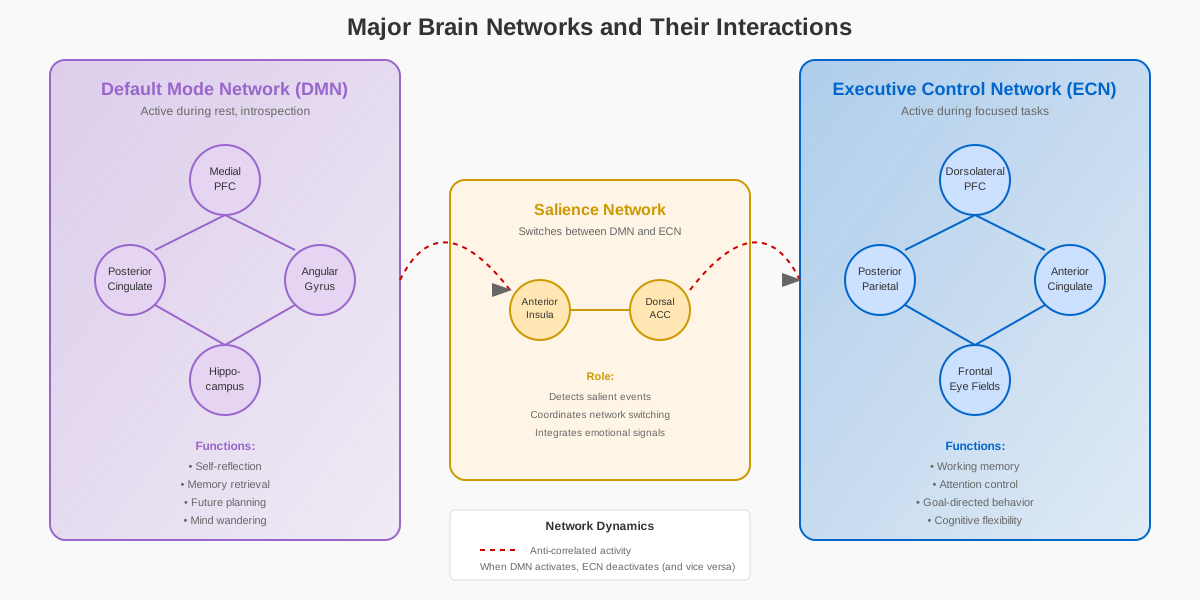
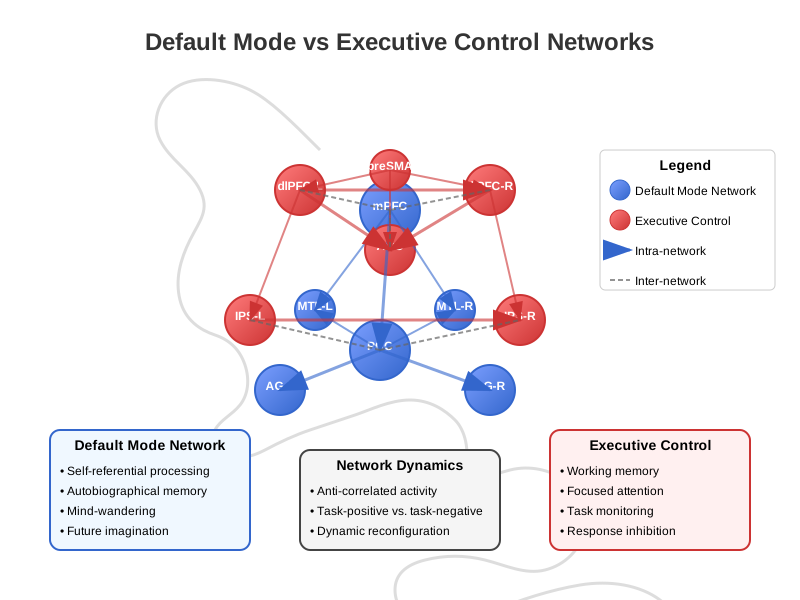 Figure 5.1: A simplified view of the two major brain networks. The Default Mode Network (DMN, blue) is active during internal thought, while the Executive Control Network (ECN, red) is active during externally-focused tasks. They are often anti-correlated.
The DMN is the brain’s inward-facing network. It’s what’s active when you let your mind wander, remember a past event, or imagine the future.
Core Functions: - Self-Referential Thought: Thinking about yourself, your feelings, and your identity. - Autobiographical Memory: Recalling personal experiences. - Future Simulation: Imagining what you’ll do tomorrow or next year. - Creative Brainstorming: Combining old ideas in new ways.
Human Analogy: The Corporate Strategy Team If the ECN is the CEO executing the current quarter’s plan, the DMN is the long-term strategy and R&D department. - It’s not involved in the day-to-day grind. - Its job is to review past performance (memory), simulate future market scenarios (future thinking), and brainstorm innovative new products (creativity). - It provides the high-level context and creative ideas that the CEO can then choose to implement.
The DMN can be thought of as the brain’s generative model. It constructs mental scenes, narratives, and simulations based on its stored knowledge of the world. This is strikingly similar to modern generative AI: - Large Language Models (LLMs): When an LLM generates a story, it’s sampling from its vast training data to construct a novel, coherent output, much like the DMN combines memories to imagine a future event. - Diffusion Models / GANs: These models learn a latent space of possible images and can then generate new, realistic images from that space. The DMN appears to operate on a similar principle, exploring a “latent space” of personal experience and knowledge.
The ECN is the brain’s outward-facing, goal-directed network. It engages when you need to concentrate, make decisions, and interact with the world.
Core Functions: - Working Memory: Holding information in your mind (like a phone number). - Cognitive Control: Overriding automatic habits to do something more difficult. - Task Switching: Flexibly moving from one task to another. - Focused Attention: Directing your mental spotlight onto a specific sensory input.
The ECN is analogous to the discriminative and decision-making components of an AI system. - Image Classifiers (Discriminative Models): A model trained to classify an image as “cat” or “dog” is performing a focused, goal-directed task, similar to the ECN. It must suppress irrelevant information and focus on the features that are diagnostic for the task. - Reinforcement Learning (RL) Agents: An RL agent executing a learned policy to maximize rewards is a perfect analog for the ECN. It must maintain its goal, monitor its performance, and adjust its actions to achieve a specific outcome.
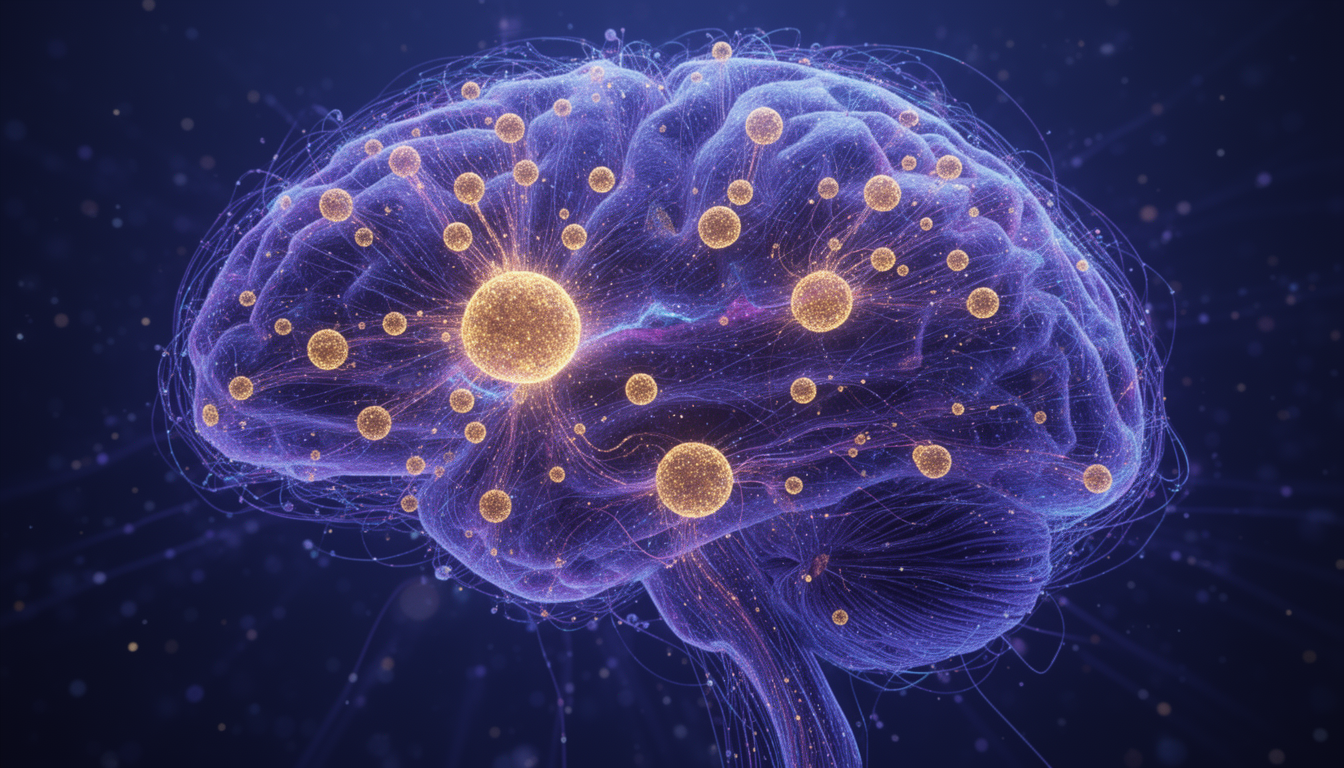
The most fascinating aspect of these two networks is their relationship. For the most part, they are anti-correlated: when the ECN is active, the DMN is quiet, and vice-versa. This makes perfect sense—it’s hard to daydream and focus on a math problem at the same time.
This dynamic switching is orchestrated by a third network, the Salience Network, which acts as a traffic cop. It monitors the environment for important (salient) events and helps switch control from the introspective DMN to the task-focused ECN when needed.
This neural dynamic is a beautiful biological implementation of the exploration-exploitation trade-off, a fundamental concept in machine learning. - Exploration (DMN): When the DMN is active, the brain is in an exploratory mode. It’s wandering through its memory space, making novel connections, and generating new ideas. This is high-variance, creative thinking. - Exploitation (ECN): When the ECN is active, the brain is in an exploitative mode. It’s using a known strategy to execute a specific task and achieve a goal. This is low-variance, focused execution.
A healthy mind, like a successful RL agent, needs to be able to flexibly switch between these two modes: exploring to find new and better strategies, and exploiting those strategies to achieve goals.
Dysregulation of this network balance is a hallmark of several mental health conditions: - Depression: Often characterized by an overactive DMN, leading to excessive rumination and difficulty disengaging from negative self-referential thoughts. - ADHD: Associated with an unreliable ECN and inappropriate intrusions from the DMN, leading to difficulty maintaining focus on external tasks.
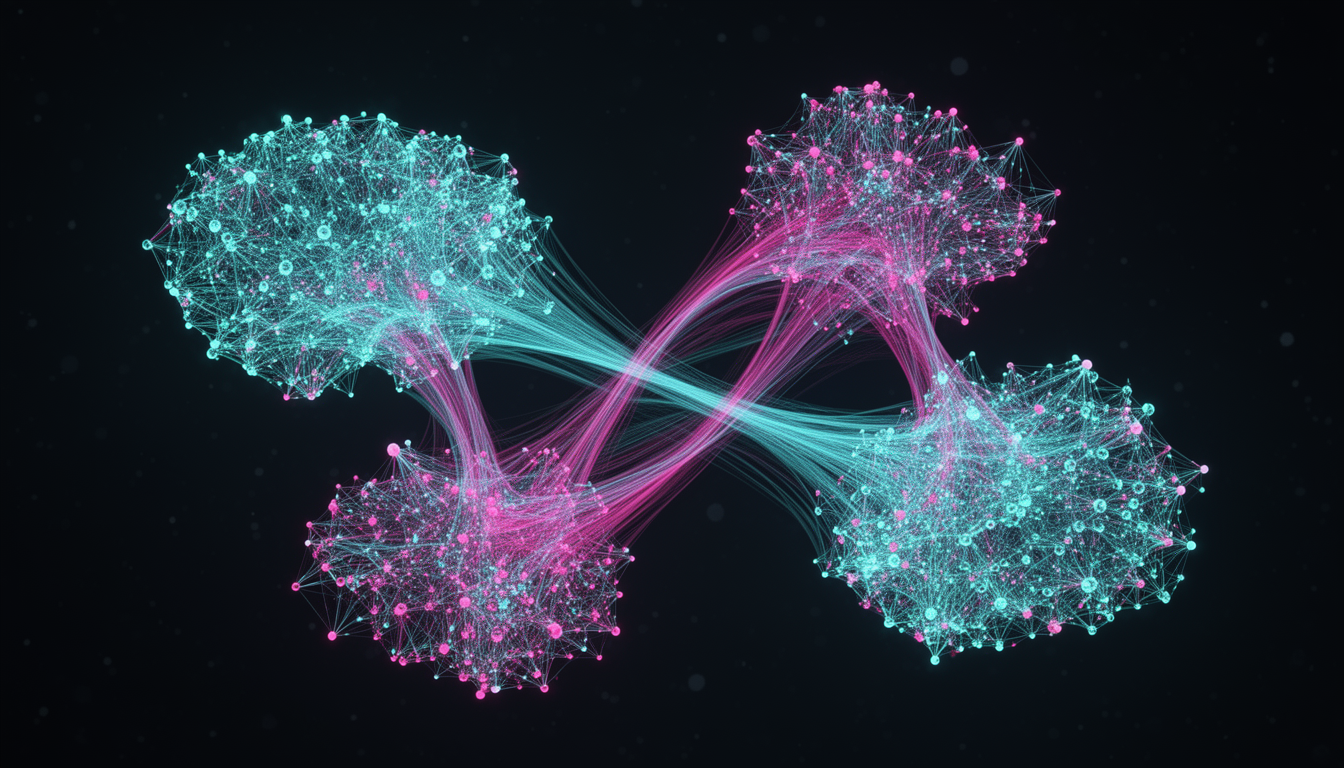
Let’s use Python to explore these network concepts. We’ll simulate some brain connectivity data and analyze it using graph theory.
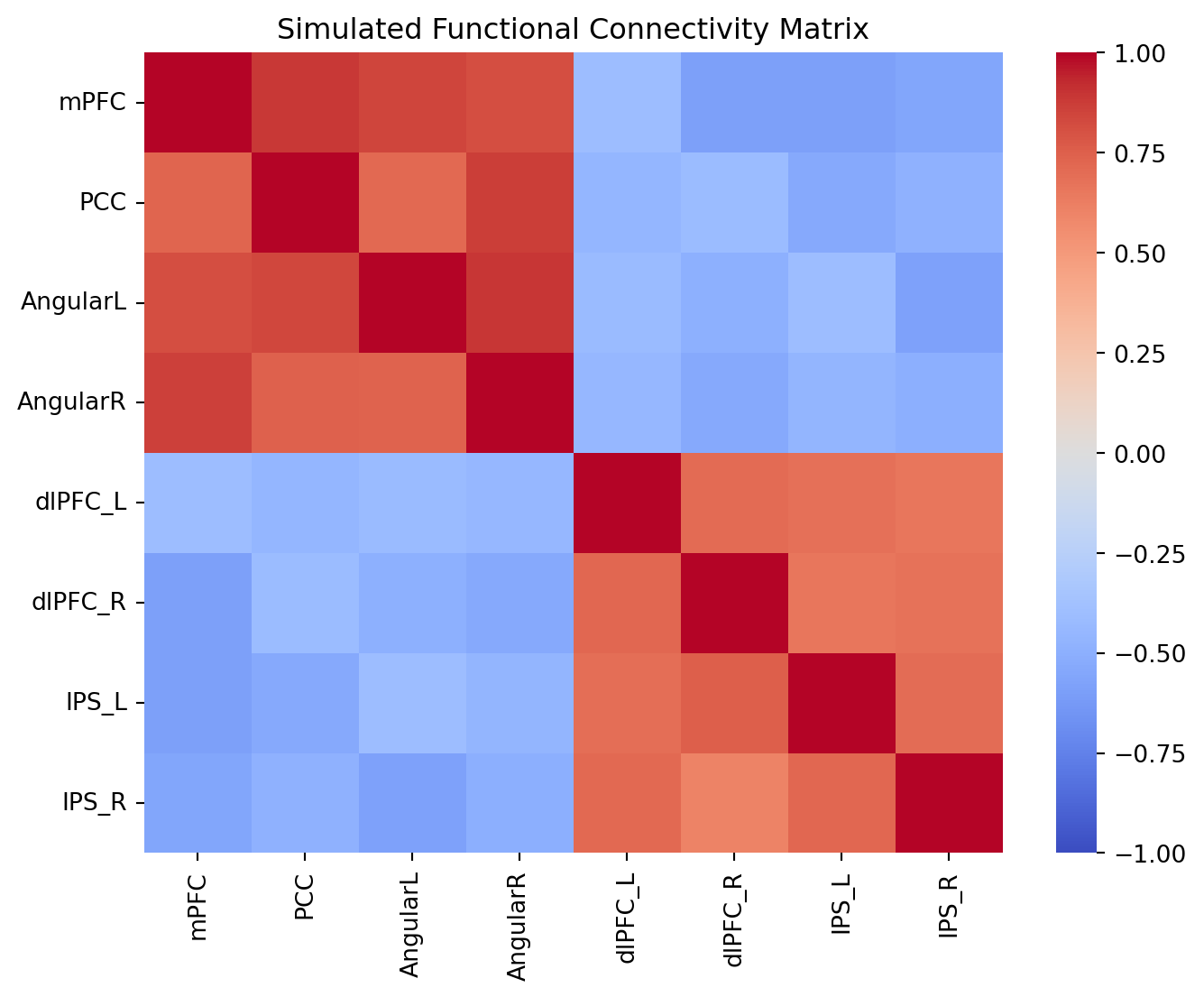
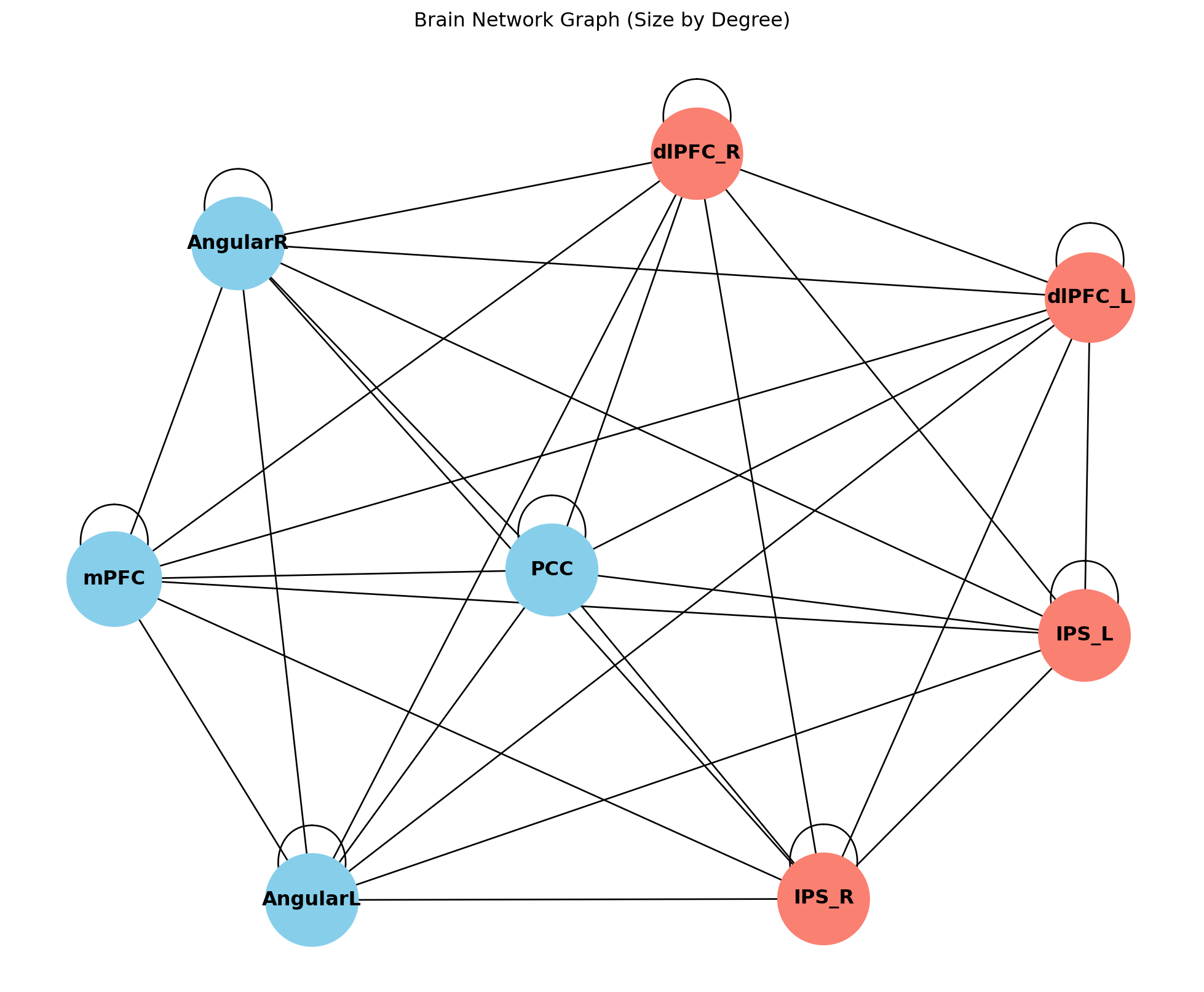
First, we’ll create a simulated functional connectivity matrix, representing the correlations between brain regions, and then visualize it and compute key network metrics.
Now, let’s simulate the anti-correlated time series of the DMN and ECN, including periods of task engagement where the ECN becomes dominant.
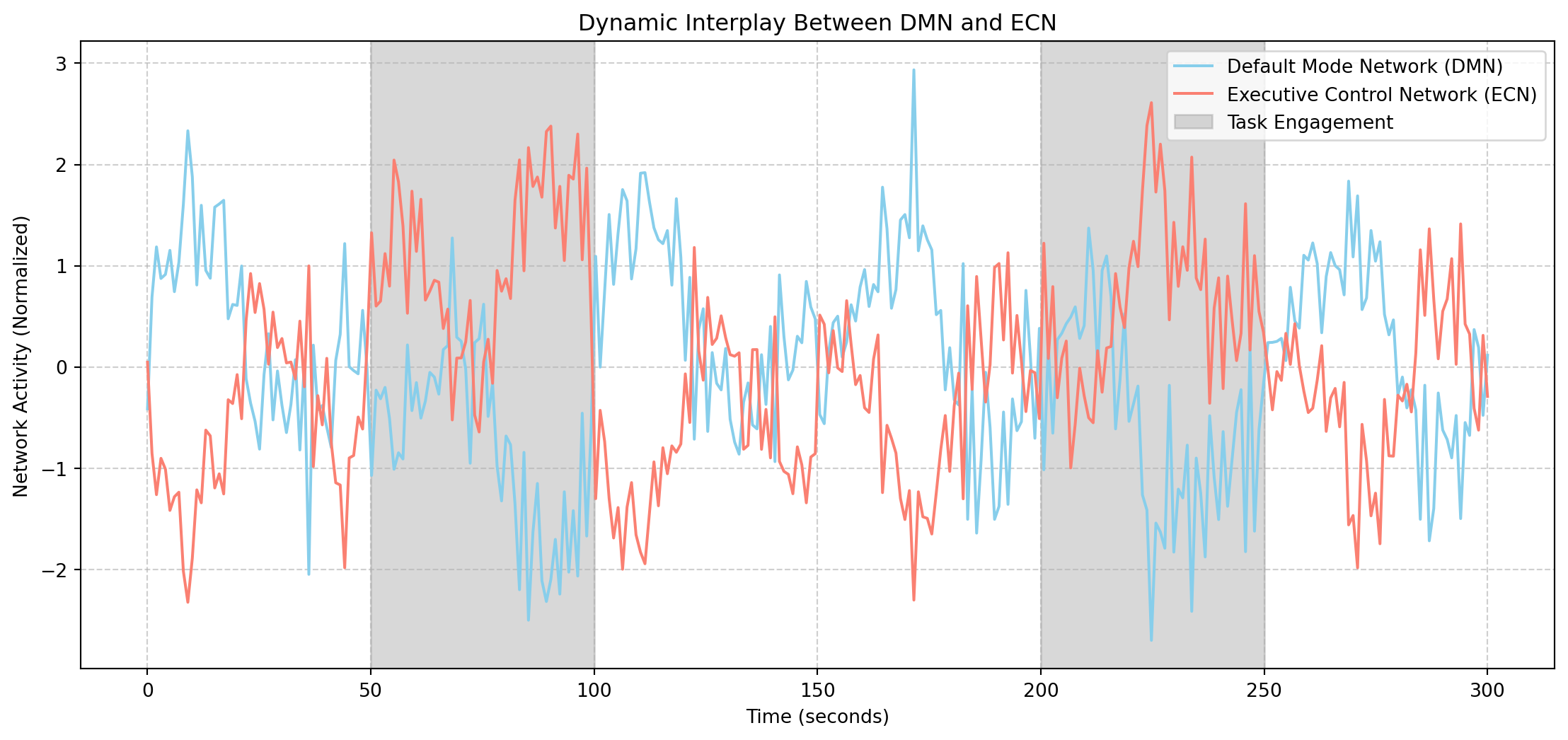
Overall correlation between DMN and ECN: -0.87Chapter Summary In this chapter, we explored the large-scale organization of the brain, focusing on the two cornerstone networks that govern our mental lives.
- We introduced network neuroscience as a framework for understanding the brain as an integrated system.
- We met the Default Mode Network (DMN), the brain’s internal simulator, responsible for memory, future thinking, and creativity. We linked it to generative AI and the principle of exploration.
- We contrasted this with the Executive Control Network (ECN), the brain’s taskmaster, responsible for focus, working memory, and decision-making. We linked it to discriminative AI and the principle of exploitation.
- We saw how the constant, anti-correlated dance between these networks, managed by the Salience Network, allows for flexible, adaptive cognition.
- Through code, we simulated and analyzed these network dynamics, making abstract concepts concrete.
By understanding the brain’s division of labor into these two fundamental modes, we gain not only a profound insight into the nature of human thought but also a powerful set of principles for designing the next generation of artificial intelligence.
Explain the functional roles of the Default Mode Network (DMN) and Executive Control Network (ECN). What cognitive processes does each network support? Why might it be beneficial to have these as separate, often anti-correlated networks?
Compare the DMN to generative AI models. How is the DMN’s function of simulating future scenarios and recombining memories similar to how generative models like GPT or diffusion models work? What are the key parallels and differences?
Describe the exploration-exploitation trade-off in the context of brain networks. How does the dynamic switching between DMN and ECN relate to exploration and exploitation in reinforcement learning? What role does the Salience Network play?
Explain how network dysregulation relates to mental health. Choose either depression or ADHD and describe how the balance between DMN and ECN is disrupted. How might understanding these network dynamics inform treatment approaches?
Raichle, M. E., MacLeod, A. M., Snyder, A. Z., Powers, W. J., Gusnard, D. A., & Shulman, G. L. (2001). A default mode of brain function. Proceedings of the National Academy of Sciences, 98(2), 676-682.
Fox, M. D., Snyder, A. Z., Vincent, J. L., Corbetta, M., Van Essen, D. C., & Raichle, M. E. (2005). The human brain is intrinsically organized into dynamic, anticorrelated functional networks. Proceedings of the National Academy of Sciences, 102(27), 9673-9678.
Cole, M. W., Reynolds, J. R., Power, J. D., Repovs, G., Anticevic, A., & Braver, T. S. (2013). Multi-task connectivity reveals flexible hubs for adaptive task control. Nature Neuroscience, 16(9), 1348-1355.
Bassett, D. S., & Sporns, O. (2017). Network neuroscience. Nature Neuroscience, 20(3), 353-364.
Sporns, O. (2018). Graph theory methods: Applications in brain networks. Dialogues in Clinical Neuroscience, 20(2), 111-121.
Bullmore, E., & Sporns, O. (2009). Complex brain networks: Graph theoretical analysis of structural and functional systems. Nature Reviews Neuroscience, 10(3), 186-198.
Seeley, W. W., Menon, V., Schatzberg, A. F., Keller, J., Glover, G. H., Kenna, H., et al. (2007). Dissociable intrinsic connectivity networks for salience processing and executive control. Journal of Neuroscience, 27(9), 2349-2356.
Buckner, R. L., Andrews-Hanna, J. R., & Schacter, D. L. (2008). The brain’s default network: Anatomy, function, and relevance to disease. Annals of the New York Academy of Sciences, 1124(1), 1-38.
Power, J. D., Cohen, A. L., Nelson, S. M., Wig, G. S., Barnes, K. A., Church, J. A., et al. (2011). Functional network organization of the human brain. Neuron, 72(4), 665-678.
Yeo, B. T., Krienen, F. M., Sepulcre, J., Sabuncu, M. R., Lashkari, D., Hollinshead, M., et al. (2011). The organization of the human cerebral cortex estimated by intrinsic functional connectivity. Journal of Neurophysiology, 106(3), 1125-1165.
Anticevic, A., Cole, M. W., Murray, J. D., Corlett, P. R., Wang, X. J., & Krystal, J. H. (2012). The role of default network deactivation in cognition and disease. Trends in Cognitive Sciences, 16(12), 584-592.
Smallwood, J., & Schooler, J. W. (2015). The science of mind wandering: Empirically navigating the stream of consciousness. Annual Review of Psychology, 66, 487-518.